



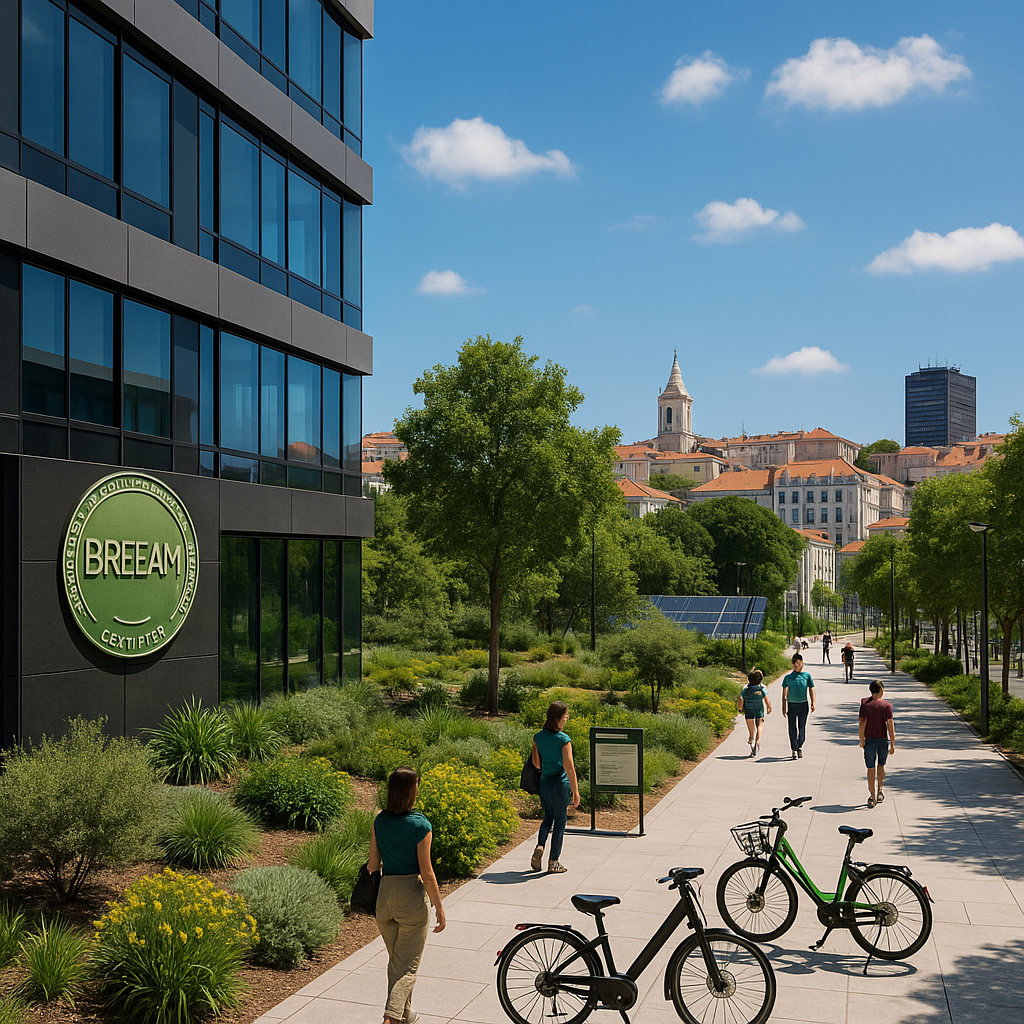
Portugal's real estate sector is undergoing a profound transformation, with sustainability no longer merely a differentiator but a fundamental requirement. This shift is driven by a global and European imperative to combat climate change, with building certifications emerging as a crucial tool to measure, evaluate, and promote sustainable construction practices. Expert opinions and market reports confirm that these certifications are redefining value and attracting investment in the Portuguese property landscape.
The Rise of Green Building Certifications
Certifications such as BREEAM, LEED, and WELL are internationally recognized systems that assess a building's sustainability across multiple dimensions, extending beyond mere energy performance to include environmental, social, and economic aspects.
- BREEAM (Building Research Establishment Environmental Assessment Method), developed in the UK in 1990, was the first sustainability assessment system for buildings. It is widely diffused internationally, with over 592,900 certified buildings in more than 80 countries. BREEAM evaluates projects based on categories like management, health and well-being, energy, transport, water, materials, waste, ecology and land use, pollution, and innovation, assigning ratings from "Sufficient" to "Exceptional".
- LEED (Leadership in Energy and Environmental Design) is described as the most globally expressed building life cycle sustainability assessment system, allowing for regional adaptations while maintaining a robust global standard.
- WELL focuses specifically on the health and well-being of building occupants.
- Other certifications like WiredScore (digital connectivity) and SmartScore (smart building capabilities) are also gaining traction, particularly in the commercial sector.
The Bureau Veritas, a multinational company specializing in quality, health, safety, management, and environment, actively supports clients in obtaining BREEAM, LEED, and WELL certifications, viewing them as concrete realizations of sustainable development.
Market Trends and Geographic Concentration
The "Top-Ranked Assets and Emerging Opportunities - Portugal Report 2025" highlights a strong urban concentration of certified buildings in Portugal, with Lisbon and Porto leading the way.
- Lisbon accounts for 62.8% of all certified buildings, showcasing a mature and dynamic sustainable building market with diverse certifications across office, residential, retail, public assembly, and special-purpose buildings. It also has the highest number of buildings rated "Very Good" (29) and is the only city with certifications spanning nearly every rating level, including "Platinum" and "Outstanding".
- Porto holds 18.3% of certified buildings, emerging as a growing secondary hub. While offices dominate, Porto also stands out for having three certified hotels, signaling momentum in sustainable tourism.
- Oeiras (7.3%), Matosinhos (5.8%), and Sintra (5.8%) are identified as emerging markets with potential for growth. Oeiras, in particular, demonstrates a strong commitment to high performance, with 10 buildings rated "Excellent" in BREEAM, exceeding the standard average.
Overall, 73% of certified buildings in Portugal are BREEAM-certified, and a significant 87% of certified assets are offices. This concentration indicates a clear focus on the office sector but also points to opportunities for strategic expansion in residential and retail assets, driven by rising housing demand and tourism recovery.
The Tangible Benefits of Certification
The benefits of green building certifications are manifold, extending beyond environmental responsibility to deliver significant economic and social advantages for all stakeholders.
- For Investors and Owners: Sustainable spaces lead to an increase in rental value (rent premium), attract premium clients, ensure faster occupancy, enable longer leases, and result in greater operational efficiency. They also enhance brand reputation and trust. Studies show that the additional investment for sustainable measures (1% to 5%) can lead to a 15% to 20% increase in property value. Non-sustainable properties, conversely, risk depreciation and increased fiscal burden due to excessive carbon emissions.
- For Tenants and Users: Occupying sustainable spaces means reduced service charges, improved company reputation, communication of a corporate vision, and the promotion of employee health, well-being, and productivity. As Dolores Huerta from Green Building Council Spain notes, buildings with sustainability certifications can consume 20% to 40% less energy than those without.
The market is increasingly demanding these standards. Marta Vieira Lourenço, Head Portfolio Solutions SE Cluster Valuation Advisory at JLL, observes that some occupants are unwilling to even consider properties without certifications or a good ESG rating. This pressure from investors and occupants is accelerating the adoption of ESG (Environment, Social, Governance) criteria, which are becoming mandatory for financing and investment decisions.
Leading Real Estate Players Embracing Sustainability
Several key developers and property groups in Portugal are at the forefront of this green revolution, integrating certifications into their core business strategies:
- JLL emphasizes that sustainability is in its DNA, with professional BREEAM Assessors developing sustainable projects to meet client needs. Caetano de Bragança, JLL's Head of Sustainability, notes that 82% of active operators in Portugal intend to advance their commitment to sustainability, surpassing countries like Germany, Spain, or France.
- Savills is a prominent player, with Nuno Fideles, their Associate Architect & Sustainability Consultant, stating that they are currently handling over 22 buildings for BREEAM In-Use certification. Their new Lisbon headquarters, the MB4 building, is a prime example: a remodeled 1980s property with a 62% reduction in carbon footprint, targeting BREEAM In-Use "Excellent" through solar panels, smart lighting, and water conservation. Fideles stresses that rehabilitation, not new construction, is the solution for decarbonization in Portugal's aging building stock.
- Avenue's EXEO development in Parque das Nações is designed for sustainability, aiming for LEED Gold and WELL Gold certifications.
- Bedrock Capital Partners's ALLO – Alcântara Lisbon Offices also targets WELL Gold, LEED Gold, and WiredScore Gold.
- Martinhal is behind the new Ageas HQ in Lisbon, which will achieve BREEAM certification.
- The new Miniclip building in Taguspark is pursuing WELL and LEED certifications.
- FVG Group's new World Trade Center Lisboa is set to receive WELL Gold and LEED Gold certifications.
- Merlin Properties has secured WiredScore certification for its offices, including the Monumental building in Lisbon, and SmartScore certification for other properties.
- Sonae Sierra has a long-standing commitment to sustainability, evidenced by their first Environment policy in 1998 and their integration of ESG criteria. They consistently achieve high "Green Star" ratings from GRESB, a key factor for attracting institutional investors. Sonae Sierra aims for "Nearly Zero" emissions by 2040 and utilizes green bonds for refinancing, emphasizing the financial sector's increasing alignment with sustainable practices.
- Vanguard Properties is committed to making all its new buildings "Nearly Zero Energy Buildings" (NZEB). Their Terras da Comporta project exemplifies this, planning to be the largest decentralized energy production community in Europe, aiming for 80% energy autonomy and 40% energy cost reduction through photovoltaic panels. José Cardoso Botelho, CEO, and Manuel Collares Pereira, Scientific Advisor, highlight the use of carbon-negative materials like wood in their constructions.
- Grupo Casais focuses on creating healthier and more sustainable buildings by applying circular economy principles and industrialization, including hybrid wood construction that can reduce the carbon footprint by up to 60%.
- Nhood Portugal has an ambitious goal of a zero carbon footprint by 2040. They are pursuing BREEAM In-Use certification for 100% of their managed commercial assets and already source 100% of their energy from renewables.
- CBRE Portugal acknowledges the increasing demand for sustainable assets, noting that properties failing to meet new parameters will experience "a great polarization" and potential value depreciation.
- Habitat Invest is also involved, with their Duque 70 residential building in Lisbon being the first to receive the co/vida20 certification, focusing on health and well-being.
- Companies like Matter (using agricultural waste for building materials) and Corkbrick (modular cork systems) are driving innovation in sustainable materials and construction flexibility.
- Suppliers such as Reynaers Aluminium and Saint-Gobain Portugal (through brands like Weber, Placo, and ISOVER) are developing durable, recycled, and energy-efficient materials, emphasizing their role in the circular economy and rehabilitation efforts.
- VICTORIA Seguros demonstrates internal commitment with its "intelligent building" headquarters in Miraflores, designed for energy efficiency and employee well-being since 1996, even discouraging elevator use for short distances to promote movement.
The Path Forward: Challenges and Opportunities
While significant progress has been made, the journey towards a fully decarbonized and sustainable real estate sector in Portugal is still in its early stages. Challenges include increasing construction costs and a need for greater public awareness. However, these challenges also create opportunities for innovation, particularly in industrialized construction methods and sustainable materials.
Regulatory frameworks like the EU Taxonomy and the Long-Term Strategy for Building Renovation (ELPRE) are crucial drivers, setting ambitious targets and guiding investment towards sustainable activities. The focus on rehabilitation of existing buildings is paramount, as it offers the greatest potential for energy transition and decarbonization given Portugal's extensive and often inefficient building stock.
In conclusion, the growing adoption of building certifications by leading developers and the increasing demand from investors and occupants signify a clear and irreversible shift in the Portuguese real estate market. Sustainability is no longer an option but a strategic imperative, driving innovation, enhancing asset value, and fostering a healthier, more resilient built environment for all.
Comments